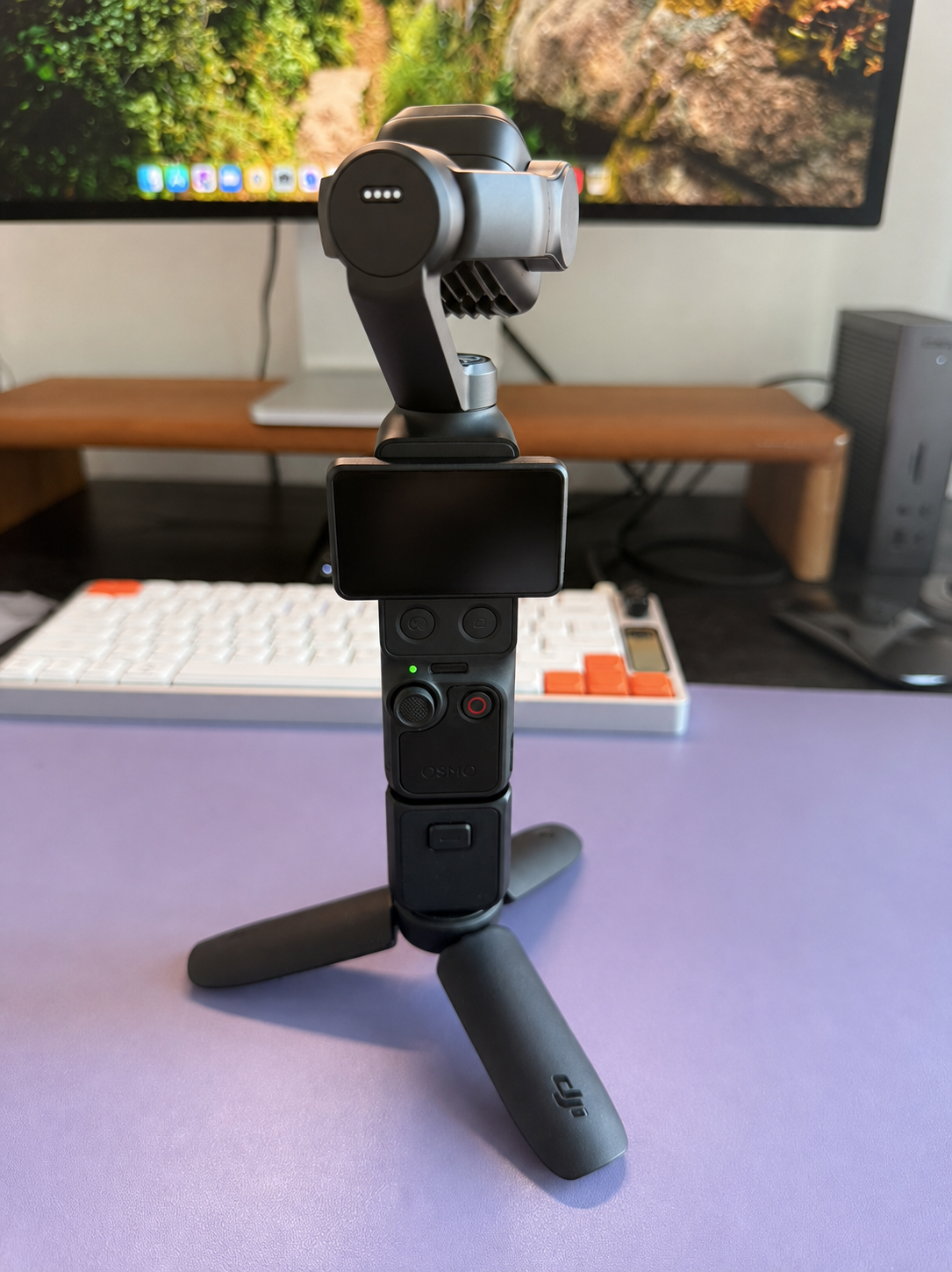
I sold my Pocket 3 on eBay and bought the new Pocket 4P there too. I paid almost $1,000 for it. Definitely a premium, but I love it.
What makes this one interesting
The second lens is the big change. The Pocket 4P pairs a 20mm-equivalent wide camera with a 60mm-equivalent camera. That gives it two quite different views: a wide frame for the surroundings, and a tighter frame for a person or a detail. Those focal lengths and the three-axis mechanical gimbal are listed in DJI’s launch announcement, reproduced by DPReview.
The appeal is having those options in one small device. A camera that is easy to carry has a better chance of coming along on an ordinary day, even when there is no particular plan to shoot anything.
Coming from the Pocket 3
A few differences help explain the upgrade:
- A second focal length. The Pocket 3 has a single 20mm-equivalent lens. The 4P adds the dedicated 60mm view.
- More slow-motion headroom. The Pocket 3 offers 4K at 120fps in slow-motion mode; DJI lists up to 4K at 240fps for the 4P’s wide camera.
- A little more to carry. DJI lists the Pocket 3 at 179g and the 4P at 230g, before accessories. Still small, but the upgrade adds 51g.
These are published specifications, not measurements from my own testing. Sources: Pocket 3 specifications and DJI’s Pocket 4P announcement.
The tradeoff
For me, the obvious downside was the price. Almost $1,000 is a lot for a pocket camera, especially after paying about RMB 3,500 for the Pocket 3 in China.
The useful question is whether the extra lens would actually get used. For mostly wide travel clips, the Pocket 3 already covers that view. The 4P makes more sense when tighter framing matters too. More features alone do not make an upgrade necessary.
I made the switch, and I’m happy with it. That doesn’t make my eBay price an easy recommendation for everyone.
Buying it in the U.S.
It wasn’t officially available in the U.S. at launch. DJI told DPReview that its authorization application was still pending.
Checked September 5, 2026: the regulatory background is the FCC’s December 2025 Covered List update, which blocks new authorizations for covered equipment.
Comments
Questions or thoughts? Join the conversation with your GitHub account. Comments are public.
You can also read and join discussions on GitHub ↗