I bought my Oura Ring 4 on May 15, 2026, and it arrived on May 20. I’ve been using it since then. An Amex credit saved me $200, which helped with the price.
A different kind of wearable
The interesting thing about Oura is the form. There is no display to check on the ring itself. It collects data, and the app is where the sleep and activity information lives. That makes it a different proposition from putting another screen on your wrist.
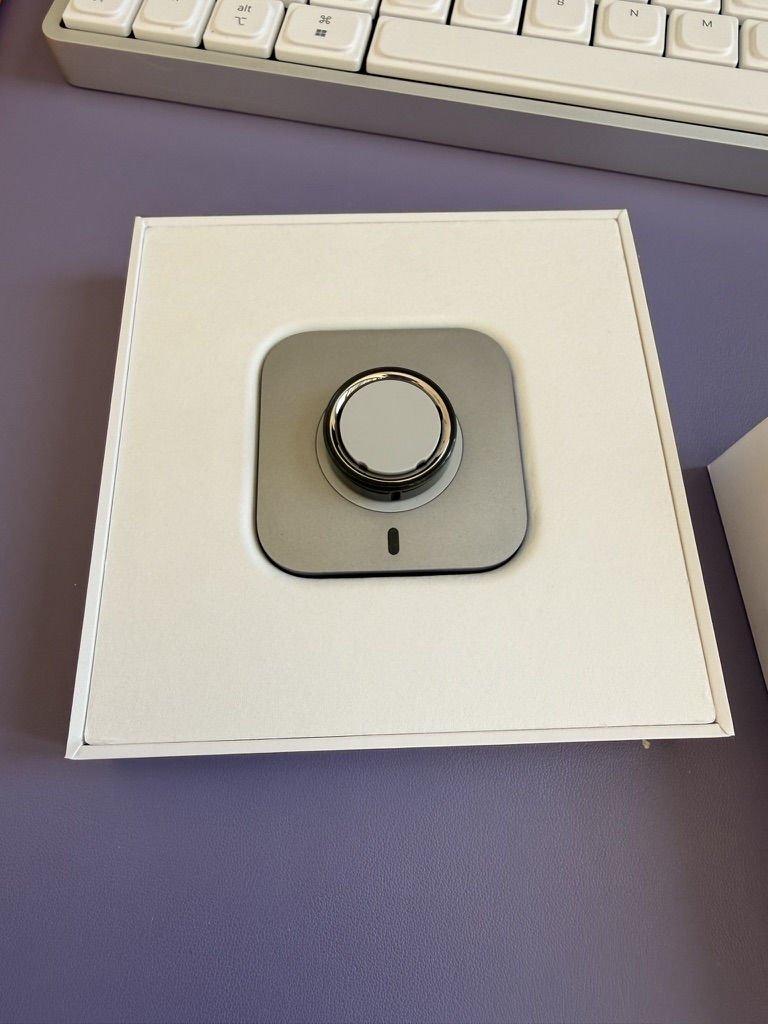
Oura lists titanium on both the inner and outer surfaces of Ring 4, along with sleep, activity, and recovery features. The photos below show how the sensors sit inside what otherwise looks like a fairly ordinary band.
What matters in everyday use
With something worn this often, fit matters as much as the feature list. A ring needs to work while typing, washing your hands, and sleeping. The appeal of the format depends on whether you are comfortable keeping it on.
The other useful question is what you do with the information. A history of your habits can be more useful than reacting to a single morning’s score. I haven’t done a controlled accuracy comparison, so this is a record of the ring I’m using, not an accuracy test.
The ongoing cost
The purchase price is only part of it. As of September 5, 2026, Oura lists U.S. membership at $5.99 a month or $69.99 a year before tax. That recurring cost belongs in the decision alongside the ring itself. My $200 credit was a saving on my purchase, not a price everyone should expect.
Comments
Questions or thoughts? Join the conversation with your GitHub account. Comments are public.
You can also read and join discussions on GitHub ↗