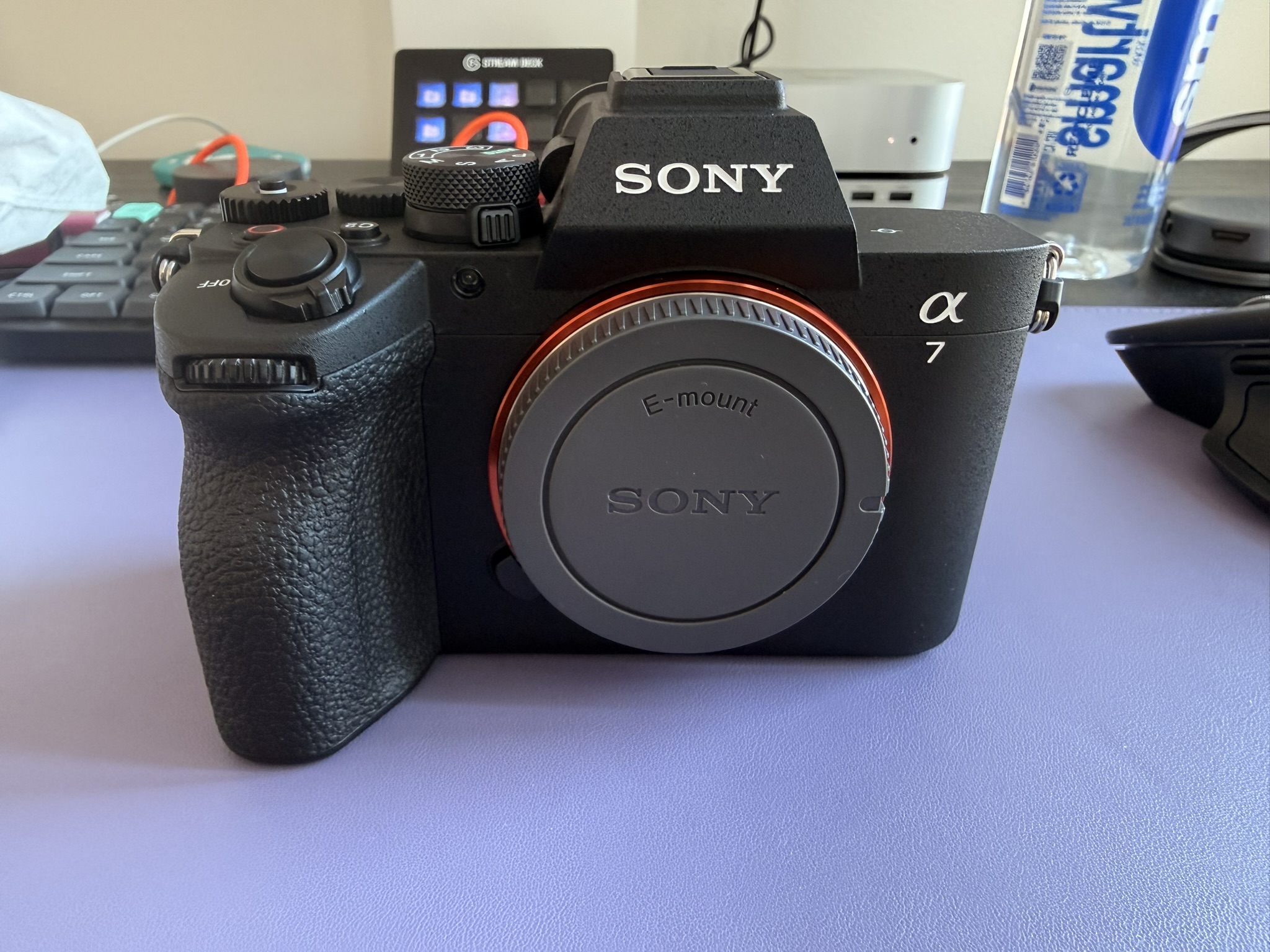
This is my Sony α7 V, also called the A7M5. These photos show the body on my desk: the front, the top dials, and the rear screen and controls.
The appeal of an all-round camera
The α7 V sits in the part of Sony’s lineup meant to cover both photos and video. Sony’s launch announcement lists a roughly 33-megapixel, partially stacked full-frame sensor and the BIONZ XR2 processor with subject-recognition autofocus.
That is a useful combination on paper: enough resolution for cropping, with an emphasis on reading the sensor quickly and following a moving subject. Those are manufacturer specifications rather than results from my own testing.
The body is only half the decision
The controls are worth a look too. There is a proper grip, a viewfinder, several dials, and an autofocus joystick. Physical controls give frequently used settings a place of their own instead of making every adjustment a touchscreen task.
But an interchangeable-lens camera is a system purchase. The lens changes how much the kit weighs, what it can photograph, and how often it is practical to carry. A compact lens and a large zoom make very different everyday cameras out of the same body.
The tradeoff
Compared with a phone or my Pocket 4P, there is more to pack and more to set up. The reason to carry it is the choice of lenses and the control over the result. Whether that is worth the extra bag space depends on the outing.
For now, this page is a look at the hardware. It would take actual shooting examples to say anything useful about my autofocus hit rate or low-light results.
Comments
Questions or thoughts? Join the conversation with your GitHub account. Comments are public.
You can also read and join discussions on GitHub ↗